
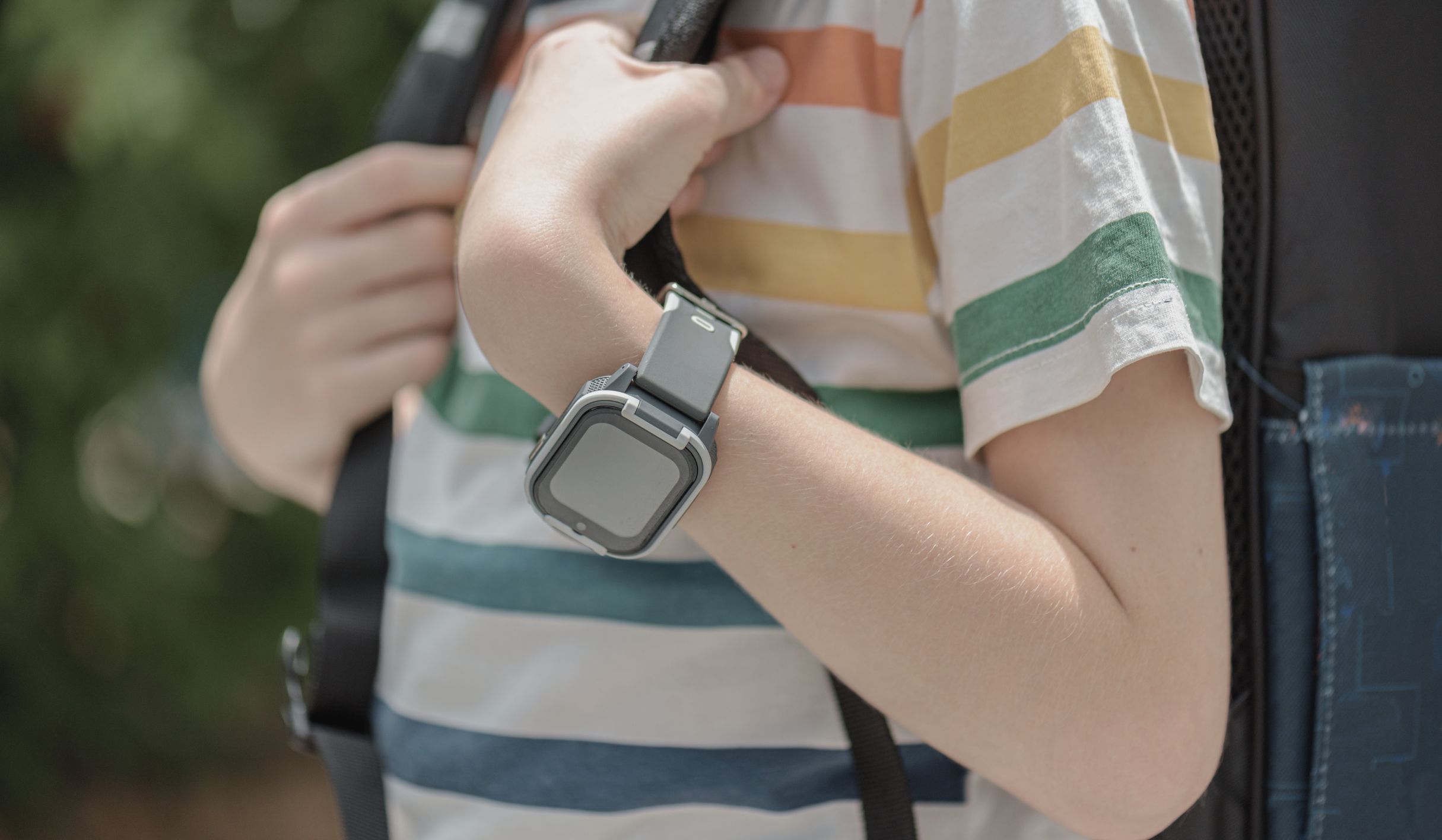
Is restraint collapse why my kid melts down after school?
It's 3:42 p.m. The car door shuts, and the kid the teacher just called "a delight" is screaming about the wrong granola bar. Shoes flung. Backpack on the floor. Someone is crying (and some days, it's me).
So, naturally, I did what any calm, well-adjusted adult does at 11pm: I compulsively read every bit of research I could find while eating my kid's leftover goldfish crackers. Turns out this has a name, after-school restraint collapse, and it's not because I packed the wrong snack. (Okay, sometimes it's the snack.)
Here's what I dug up.
Take what's useful for your family, leave the rest. 🫶
What causes restraint collapse in ADHD and autistic kids?
The term comes from Andrea Loewen Nair, a counselor and parenting educator who kept hearing parents describe the exact same afternoon: kids who could not hold their feelings in for one more minute after school let out.
Keep in mind… restraint collapse isn't a formal diagnosis. It's a parent-friendly name for a pattern a lot of families recognize, not a clinical term you'll find in a manual.
It can happen to any kid, but it's especially common in kids with ADHD, autism, or both.
Let’s picture their day…
→ Sit still.
→ Raise your hand.
→ Don't hum.
→ The lights buzz.
→ The lunchroom sounds like a jet engine.
→ And there are roughly four hundred unwritten rules about where to stand in line.
For a lot of ADHD kids, sensory overload piles right on top of the effort of paying attention for six straight hours. Plus, many neurodivergent kids also spend the day masking their traits, which drains the battery even faster.
Ever smiled through a brutal work meeting, then cried in the car before you even pulled out of the lot? Same thing. Smaller person, bigger backpack.
And the collapse usually happens where kids feel safest.
So no, your home isn't the problem. Home is the one place they finally get to stop performing.
Restraint collapse is also different from ADHD medication wearing off, which can show up in the afternoon, too. If you're not sure which one you're seeing, that's a great question for your kid's doctor.
What does the research say about masking and restraint collapse?
Here's where it got interesting. Nobody studies "restraint collapse" by that name, but researchers do study the pieces underneath it.
Masking seems to come with a real cost. Masking, also called camouflaging, is when a kid hides or tones down their natural traits to fit in, like holding back stims or copying how other kids act. A 2026 study in Advances in Neurodevelopmental Disorders looked at 662 autistic kids and teens, ages 4 to 17. Researchers compared how each kid came across to a clinician with how their parents described them at home, and treated a bigger gap as more camouflaging.
Kids who masked more had more inward signs of stress, like anxiety, low mood, and stomachaches. They also had more outward ones, like rule-breaking and aggression. And the anxiety piece seemed to sit in the middle, linking masking to the outbursts.
Off the page, that might look like:
The kid every teacher calls "so polite" who comes home and can't survive the sound of a sibling chewing.
Or the kid who reports that school was "fine" every single day, and gets a mysterious stomachache every Sunday night.
NOTE: This study was a one-time snapshot, so it can't definitively prove masking causes meltdowns. Plus, parent reports have their own bias. And it only included kids who already had an autism diagnosis, so it may miss the kids who mask so well nobody has noticed yet.
The authors also point back to earlier interview research where autistic girls described holding it together at school and then breaking down at home (sound familiar, Mama?).
Autistic adults have been describing this for years.
A 2020 study in Autism in Adulthood, led by autistic researcher Dora Raymaker, analyzed 19 interviews and 19 public online sources. Autistic adults described burnout as:
Deep exhaustion
Losing skills they usually had
Less tolerance for sensory input
👉 They said autistic burnout happened when demands piled up, and support couldn't relieve the load.
Now, this study is about adults and long-term burnout. But reading it, I recognized a tiny daily version of the same math. Demands go in, relief doesn't come, something gives.
What helped people recover from autistic burnout?
Acceptance, time off, lower expectations, and being allowed to do things in an autistic way, including unmasking.
(Can someone please tell the teachers??)
After-school meltdown vs tantrum: What's the difference?
Turns out the difference is real, not just parent semantics.
A tantrum usually has a goal, and the kid has some control over it. Picture the kid mid-wail who pauses to check whether you're watching.
A meltdown is a reaction to feeling overwhelmed, often by sensory overload, and the steering wheel has come off. You can't bribe it or reason with it, any more than you can talk your way out of a sneeze.
Meltdowns tend to end when the input drops or the kid simply runs out of fuel. That reframe flips the question from "What do they want?" to "What is too much right now?"
How do other families handle ADHD meltdowns after school?
Every family I read about handles this differently, and honestly, that's the point. Think of these as experiments, not a rulebook. You know your kid.
Clinical psychologist Andy Kahn suggests planning decompression time right when kids walk in, before homework or chores. Food, rest, and connection come first. Hugs, blanket wraps, calm music, quiet. And leading with what went well instead of a full interrogation about what went wrong.
Fair. Nobody wants a performance review the second they get through the door. Especially an overstimulated, exhausted kiddo.
Some families go all-in on movement after school: trampoline, bike, ten minutes of yelling in the backyard. Others go the opposite way, with dim lights, no questions, and a snack left quietly on the table.
For some kids, ADHD meltdowns soften with movement first. Many autistic kids seem to want less of everything.
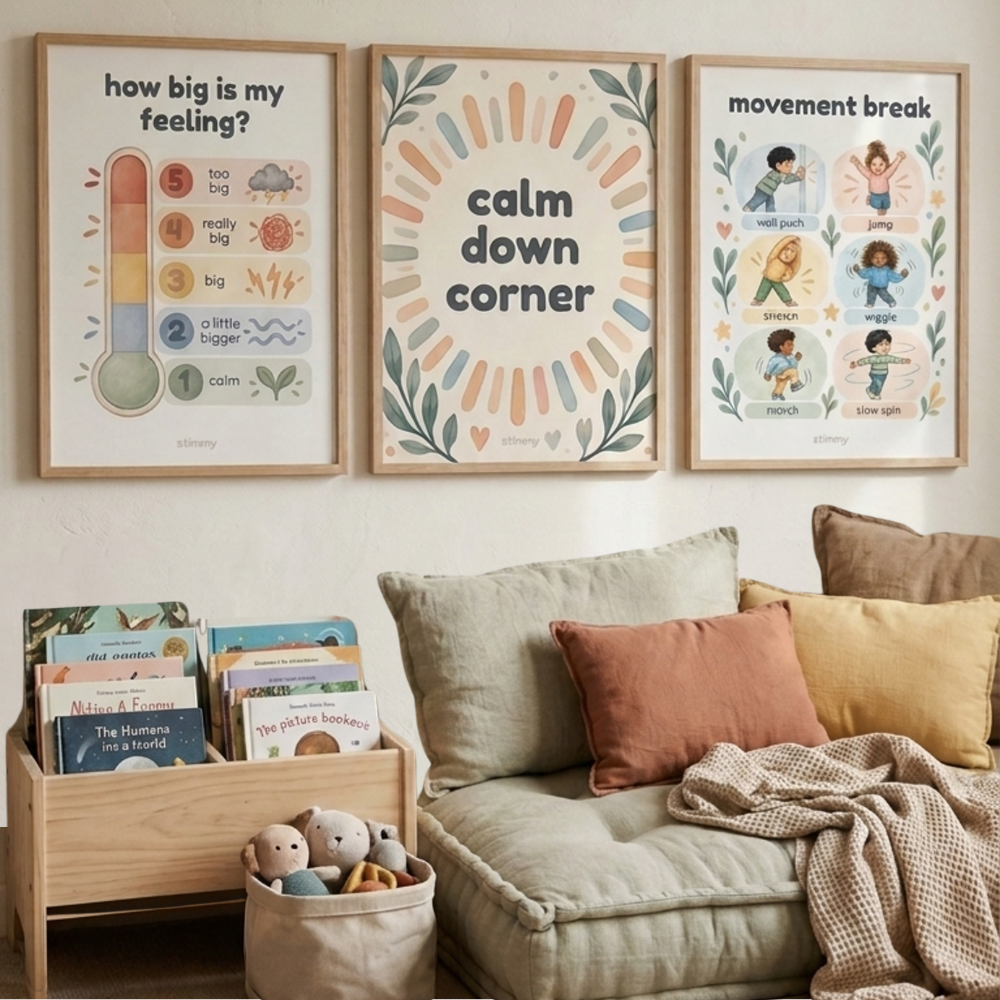
Whichever camp they're in, many families end up creating a calm down corner.
To be clear, this is not a time-out spot. A cozy, low-sensory space a kid can choose when the world feels too loud.
Basically, it’s the kid version of a grown-up hiding in the pantry with the good chips for five minutes.
(Not that anyone here would know. 👀)
It makes sense once you remember what a meltdown is. An overloaded brain tends to settle once the input drops. So a corner with soft light, a soft seat, and nobody asking anything is a pretty good place to come back down.
I’m creating a calming corner at our house, too.
But mid-meltdown, my kiddos can't find words. (Neither can the grown-up standing next to them, if I'm being honest.) So I made helpful art to hang on the walls. Posters they can look at, point to, and breathe with when talking is off the table.
And since sharing is caring, I turned them into a set you can download and print for your own calming corner! I designed each poster in gentle, earthy colors. The set works at home, in a classroom, or in a therapy office.
If it might help your crew land a little softer at 3:30, grab your poster bundle below. (And if not, no worries at all. I hope the research helped either way!)
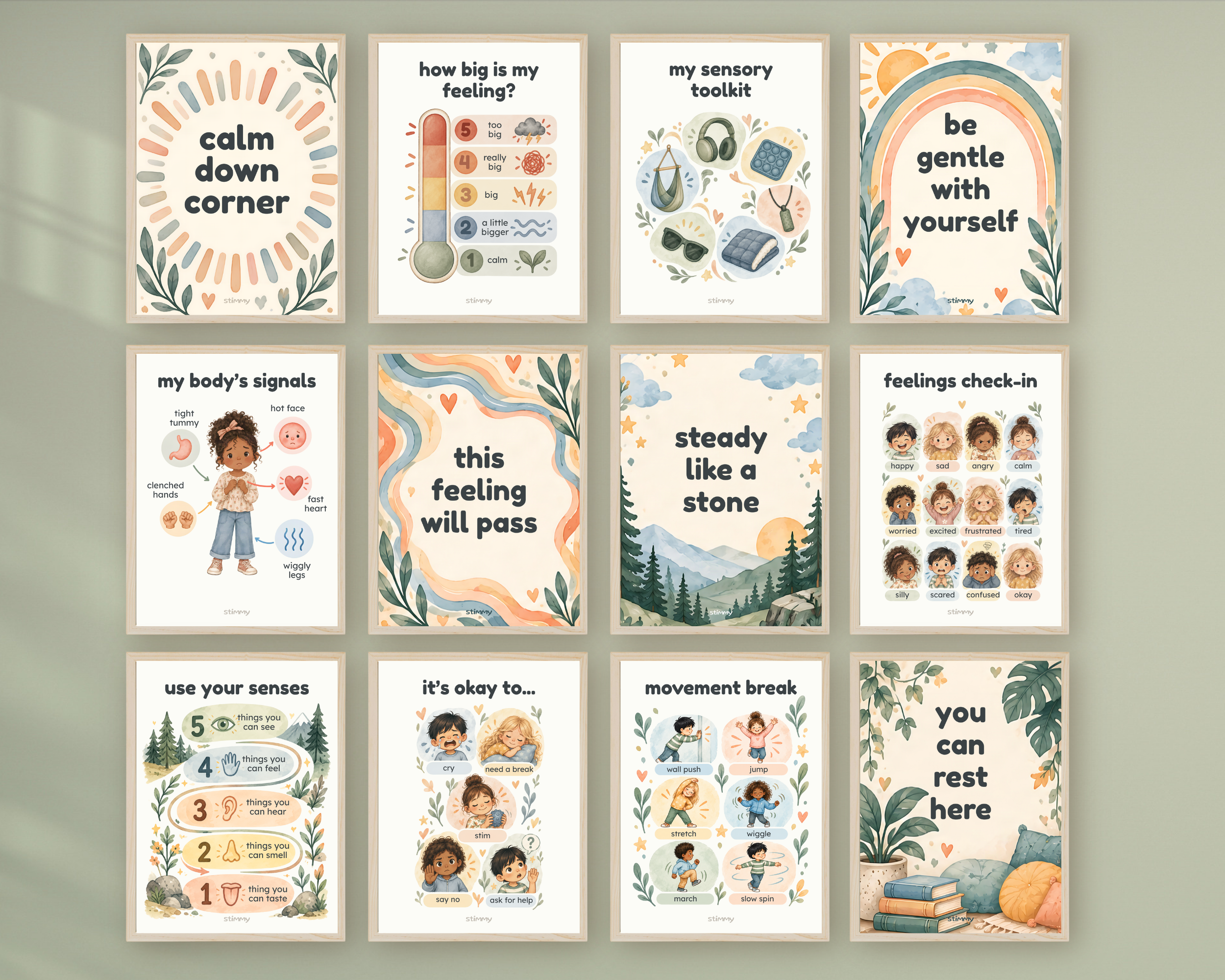
Calm, cozy sensory room decor made by a neurodivergent mom who gets it. 18 printable calm down corner posters to help little bodies notice big feelings, breathe, and find their calm.
Restraint collapse doesn't mean you're doing it wrong.
If your kiddo saves their hardest moments for you, restraint collapse may not mean something is broken. It may mean you're their safe place.
I know that's exhausting. But it’s also kind of beautiful, isn’t it?
I'm still figuring this out, one afternoon at a time. You are too, and that's okay. 🫶
Air hugs,

Sources
Belsky, G. (expert review by K. J. Carothers, PhD). Restraint collapse: Why kids fall apart after school. Understood. Updated 2026. https://www.understood.org/en/articles/restraint-collapse-why-kids-fall-apart-after-school
Dighton, S., & McAloon, J. Camouflaging, internalizing symptoms, and externalizing symptoms in children and adolescents with autism spectrum disorder. Advances in Neurodevelopmental Disorders, 10, 340–352. 2026. (Peer-reviewed, open access.) https://link.springer.com/article/10.1007/s41252-026-00476-2
Raymaker, D. M., Teo, A. R., Steckler, N. A., et al. "Having all of your internal resources exhausted beyond measure and being left with no clean-up crew": Defining autistic burnout. Autism in Adulthood, 2(2). 2020. (Peer-reviewed.) https://pdxscholar.library.pdx.edu/socwork_fac/378 · DOI: https://doi.org/10.1089/aut.2019.0079
Morin, A. The difference between tantrums and meltdowns. Understood. Updated 2026. https://www.understood.org/en/articles/the-difference-between-tantrums-and-meltdowns
